You press the button to close your garage door and … nothing happens. Or maybe the door starts moving down, suddenly stops, and reverses back up.
Now what?
If your garage door won’t close, some of the most common causes include:
- Blocked or misaligned safety sensors
- Something obstructing the door or tracks
- Damaged rollers or tracks
- Incorrect opener settings
- Broken springs or cables
- A malfunctioning garage door opener
Some simple problems can be checked safely at home, while others require professional garage door repair.
For homeowners in Phoenix, Ahwatukee, Chandler, and throughout the Valley, dust, intense sunlight, extreme heat, and everyday wear can also contribute to garage door problems.
Below, we’ll explain why your garage door may not be closing, what different symptoms can tell you about the problem, what you can safely check yourself, and when it’s time to call a garage door professional.
Why Won’t My Garage Door Close?
A garage door is a system made up of many interconnected parts. The opener may get most of the attention, but your springs, cables, tracks, rollers, safety sensors, hinges, and other components all have to work together for the door to open and close properly.
If even one garage door component isn’t doing its job, the door may:
- Refuse to close at all
- Start closing and immediately go back up
- Close only when you hold down the wall button
- Stop partway down
- Close unevenly
- Make unusual grinding, scraping, or popping noises
- Reach the floor and then reverse
- Move slowly or jerk while closing
Those symptoms can help narrow down what’s actually wrong.
Here are some of the most common causes.
1. The Garage Door Safety Sensors Are Blocked or Misaligned
If your garage door starts to close and then opens again, the safety sensors are one of the first things to check.
Modern garage door systems use photoelectric safety sensors near the bottom of the garage door opening. The sensors send a beam across the doorway. If that beam is interrupted, the system is designed to prevent the garage door from closing on a person, pet, vehicle, or other object.
Signs your garage door sensors may be the problem
You may notice:
- The garage door begins closing and immediately reverses
- The garage door won’t move downward
- A sensor light is blinking or turned off
- The opener’s lights flash when you try to close the door
- The door closes only while you continuously hold the wall-mounted button
What you can check
Look carefully around both sensors.
Check for:
- Boxes, tools, toys, or other objects blocking the beam
- Dirt or dust covering the sensor lenses
- A sensor that has been bumped out of position
- Loose or visibly damaged wiring
- Spiderwebs, leaves, or other debris around the sensors
Gently clean the lenses with a soft cloth and make sure both sensors appear to be pointing toward each other.
Phoenix area garage door tip
Dust can be a particularly common problem for garage door sensors in Arizona. Wind and dust storms can leave a surprisingly heavy coating on equipment near the garage floor.
Intense sunlight can sometimes interfere with the sensor system as well, particularly if direct sunlight is hitting one sensor.
If cleaning and removing obstructions doesn’t fix the problem, the sensors may need professional adjustment, repair, or replacement.
2. Something Is Blocking the Garage Door or Tracks
Sometimes the simplest explanation is the correct one.
Before assuming there’s a mechanical failure, check the garage door’s path.
A small object may be enough to prevent the door from closing properly.
Look for things such as:
- Rocks or gravel
- Children’s toys
- Tools
- Trash cans
- Leaves or yard debris
- Objects leaning against the track
- Dirt or debris around the rollers
Also inspect the tracks from a safe distance.
A bent, damaged, or badly misaligned track may prevent the rollers from moving normally.
Don’t try to force the garage door closed. Doing so can turn a relatively small repair into damaged rollers, tracks, cables, or door panels.
If the track itself looks bent or the door appears to be coming out of the track, stop operating it and have it inspected.
3. The Garage Door Tracks Are Bent or Misaligned
Your garage door rollers travel through tracks that guide the door as it opens and closes.
When those tracks become bent, loose, or misaligned, the garage door may bind or stop before reaching the ground.
Common symptoms include:
- Garage door stops partway down
- Door jerks or shakes as it moves
- One side appears higher than the other
- Rollers appear to be coming out of the track
- Scraping or grinding noises occur during operation
- A visible gap appears between rollers and the track
Garage door tracks can be damaged by something as simple as a bicycle, trash can, or vehicle accidentally bumping them.
Can you fix a bent garage door track yourself?
Minor debris can safely be removed, but significant track repairs are best left to a garage door professional.
The tracks work together with rollers, cables, springs, and other components under considerable forces. Trying to bend a damaged track back into place without identifying what caused the problem can make the situation worse.
If your door is moving unevenly or appears to be coming off the track, stop using it until it can be inspected.
4. The Garage Door Opener’s Travel or Force Settings Need Adjustment
What if your garage door closes almost completely, touches the floor, and then goes right back up?
The problem may involve the opener’s travel settings.
Garage door openers are programmed to know how far the door should travel before reaching the floor. If that setting is incorrect, the opener may interpret contact with the floor as an obstruction and reverse the door.
You might notice that:
- The door reaches the floor but immediately reverses
- The door stops an inch or two above the floor
- The door consistently reverses at the exact same point
- The problem began after opener work or adjustments
Some opener models allow homeowners to adjust travel settings according to the manufacturer’s instructions. However, it’s important not to simply increase force settings to make a struggling garage door close.
If the door is binding because of another mechanical problem, increasing the opener force can mask the symptom instead of fixing the cause.
When you’re unsure, have the entire garage door system inspected before adjusting the opener.
5. A Garage Door Spring Is Broken or Failing
Garage door springs help counterbalance the tremendous weight of the door.
Although people often call the motor the “garage door opener,” the opener isn’t supposed to do all of the heavy lifting by itself. Properly functioning springs make the door significantly easier to move.
When a spring breaks or loses proper tension, the garage door may:
- Refuse to open or close properly
- Feel unusually heavy
- Move unevenly
- Stop partway through operation
- Slam downward
- Put excessive strain on the opener
- Make a loud bang when the spring fails
You may also be able to see a visible separation in a torsion spring above the door.
Should you operate a garage door with a broken spring?
It’s best not to.
A broken or damaged garage door spring can make the door difficult to control and can place additional stress on other components.
Garage door spring repair is not a DIY project. Springs operate under significant tension and should be inspected and replaced by trained professionals with the appropriate tools. If you suspect a broken spring, stop operating the door and schedule professional garage door repair.
Related article: Spring Tension Adjustment: Why It’s Essential for a Safe, Smooth-Running Garage Door
6. A Garage Door Cable Is Damaged or Broken
Garage door cables work with the springs to help raise and lower the door safely.
A frayed, loose, or broken cable can create serious problems with how the door moves.
Warning signs can include:
- One side of the garage door hangs lower than the other
- The door closes at an angle
- A cable is visibly loose or hanging
- You see fraying along a cable
- The door jerks while operating
- The door becomes stuck partway open or closed
A damaged garage door cable is another problem that should be handled professionally. Because the cables are part of a system involving spring tension and a heavy moving door, attempting to reconnect or replace them yourself can be dangerous.
7. Worn or Damaged Rollers Are Preventing Smooth Movement
Garage door rollers help the door move smoothly along the tracks.
As rollers wear, crack, loosen, or become damaged, movement can become increasingly difficult.
You may notice:
- Squeaking
- Grinding
- Rattling
- Jerky movement
- Excessive vibration
- A door that catches at certain points
- Rollers that appear worn or damaged
- Lack of appropriate maintenance can also increase friction throughout the garage door system.
This is one reason routine garage door maintenance is important: identifying worn rollers and other deteriorating components early can help prevent a small issue from becoming an unexpected breakdown.
8. The Garage Door Opener Is Malfunctioning
Sometimes the problem really is the opener itself.
Garage door opener components can wear or fail over time. Circuit boards, gears, motors, wiring, limit controls, and other components may contribute to a door that won’t operate correctly.
Potential opener-related symptoms include:
- The motor runs but the door doesn’t move normally
- The opener works intermittently
- The wall control works but the remote doesn’t
- The opener makes unusual noises
- The door repeatedly stops or reverses
- The opener doesn’t respond at all
- The unit is older and has experienced multiple problems
Before assuming the opener has failed, check simple things such as power to the unit and remote batteries.
If the problem continues, professional troubleshooting can determine whether the opener can be repaired or whether replacement makes more sense.
Related article: Transform Your Home’s Security: Why It Could Be Time to Upgrade Your Garage Door Opener
9. The Garage Door Is Out of Balance
A properly balanced garage door should move smoothly without forcing the opener to compensate for excessive weight or resistance.
A door that is out of balance may:
- Close too quickly
- Move unevenly
- Stop unexpectedly
- Struggle to open
- Put excessive strain on the opener
- Make unusual noises
Balance problems frequently involve springs or other components that require professional adjustment.
If the door seems unusually heavy or unpredictable, don’t keep cycling it with the opener. Continuing to operate an unbalanced door may place additional stress on the opener and other parts.
10. Heat, Dust, and Arizona Weather May Be Contributing to the Problem
Phoenix-area garage doors operate in conditions that aren’t exactly gentle.
Extreme heat, intense sunlight, blowing dust, and monsoon storms can all contribute to wear throughout the garage door system.
Over time, Arizona conditions can affect:
- Weather seals
- Lubrication
- Rollers and hinges
- Electronic components
- Sensor lenses
- Tracks and hardware
- Garage door panels
- Opener performance
This doesn’t mean Arizona weather is responsible every time a garage door won’t close. But regular inspection and maintenance are especially worthwhile when equipment is exposed to harsh conditions year after year.
What Should I Do If My Garage Door Won’t Close?
If your garage door suddenly stops closing, start with the simplest and safest checks.
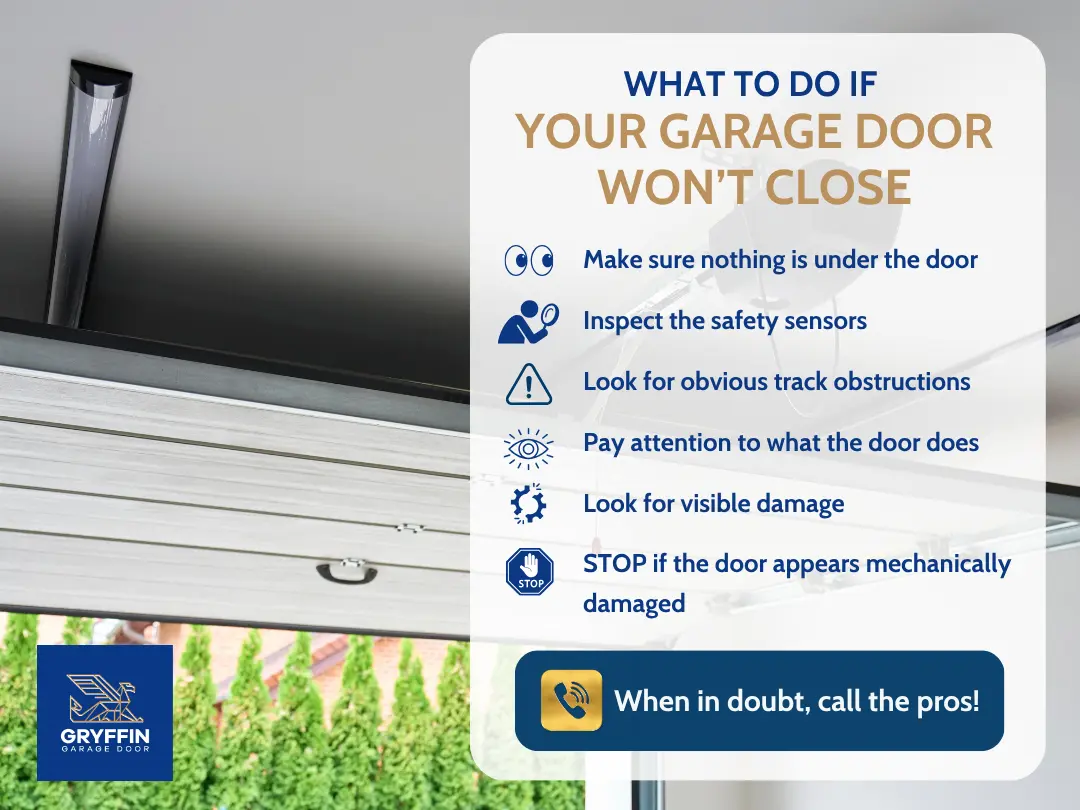
Step 1: Make sure nothing is underneath the door
Remove vehicles, boxes, toys, tools, and anything else that could obstruct its path.
Step 2: Inspect the safety sensors
Make sure they’re clean, unobstructed, and appear properly aligned.
Step 3: Look for obvious track obstructions
Remove loose debris, but don’t attempt significant track adjustments yourself.
Step 4: Pay attention to what the door does
Does it:
- Not move at all?
- Move a few inches?
- Reach the floor and reverse?
- Close halfway and stop?
- Move crookedly?
- Make grinding or popping noises?
Those details can help a garage door technician diagnose the problem faster.
Step 5: Look for visible damage
Without touching springs or cables, look for obvious problems such as:
- A broken spring
- Hanging or frayed cable
- Bent track
- Damaged roller
- Loose hardware
- Crooked door
Step 6: Stop if the door appears mechanically damaged
Don’t repeatedly press the opener button hoping the problem will fix itself.
Repeated operation can place additional strain on the opener and damaged components.
Can I Manually Close a Garage Door That Won’t Close?
Sometimes—but not always.
Many garage door openers have an emergency release that disconnects the door from the opener so it can be operated manually. However, you should not assume manual operation is safe if you don’t know what’s wrong with the door.
Do not attempt to manually operate the door if:
- A spring is broken
- A cable is damaged
- The door is off its track
- The door is hanging crookedly
- The door feels unusually heavy
- Components appear loose or unstable
A garage door can be extremely heavy. The spring system normally helps counterbalance that weight.
If you’re uncertain why the garage door won’t close, professional inspection is the safer option.
Why Does My Garage Door Start to Close and Then Go Back Up?
When a garage door starts closing and then reverses, the most likely possibilities include:
- Something is blocking the safety sensor beam.
- The sensors are dirty or misaligned.
- Something is physically obstructing the door.
- The opener’s travel settings are incorrect.
- The door is binding in the tracks.
- The opener’s safety-reversal system is detecting unexpected resistance.
Start by clearing the doorway and inspecting the safety sensors.
If the door continues reversing—particularly if it moves unevenly, makes strange noises, or appears damaged—schedule a professional inspection.
Why Will My Garage Door Close Only When I Hold the Button Down?
If your garage door won’t close normally but does close when you continuously hold the wall button, that can point toward a problem involving the safety sensor system.
Check whether:
- One sensor’s indicator light is off or blinking
- The lenses are dirty
- Something is blocking the beam
- One sensor has been knocked out of alignment
If cleaning and clearing the area doesn’t resolve the issue, the sensors or associated wiring may require service.
Why Won’t My Garage Door Close All the Way?
If your garage door stops before reaching the ground, several problems are possible.
Common causes include:
- Travel limits that need adjustment
- An obstruction in the tracks
- Damaged rollers
- Bent tracks
- Spring or cable problems
- Resistance somewhere in the garage door system
If the door consistently stops at the exact same location, that detail can be particularly useful when troubleshooting.
Avoid repeatedly forcing the door downward. Have the system inspected if the cause isn’t obvious.
FAQs About a Garage Door That Won’t Close
What is the most common reason a garage door won’t close?
One of the first things to check is the safety sensor system. An obstruction, dirty sensor lens, or misaligned sensor can prevent the garage door from closing. Other possible causes include track problems, damaged rollers, opener settings, springs, cables, or the garage door opener itself.
Can dirty garage door sensors keep the door from closing?
Yes. Dirt, dust, cobwebs, and other debris on the sensor lenses may interfere with the beam and prevent normal operation. Gently cleaning both lenses is a good first troubleshooting step.
Why is one garage door sensor green and the other yellow?
Sensor indicator lights vary by manufacturer and model, so different colors do not automatically indicate a problem. Check the manufacturer’s instructions for your opener. A blinking or unlit sensor, however, can indicate obstruction, misalignment, wiring trouble, or another sensor issue.
Why won’t my garage door close with the remote?
If the wall control closes the door normally but the remote doesn’t work, start by checking the remote batteries and whether the remote needs to be reprogrammed. If neither the remote nor wall control works normally, the problem may involve the opener, sensors, or garage door system itself.
Should I force my garage door closed if it gets stuck?
No. Forcing a stuck garage door can damage tracks, rollers, panels, cables, or other components and may create a safety hazard. If you can’t identify a simple obstruction, stop operating the door and have it inspected.
Can a broken garage door spring prevent the door from closing?
Yes. A broken or failing spring can affect how the garage door moves and balances. The door may become unusually heavy, move unevenly, stop partway, or behave unpredictably. Broken spring repair should be handled by a trained garage door professional.
Is a garage door that won’t close an emergency?
It can be. If the door is stuck open and your home cannot be secured, or if the door appears unstable, off-track, or mechanically damaged, prompt service is advisable. Avoid operating a door that could fall or move unpredictably.
When Should You Call a Garage Door Repair Professional If Your Door Won’t Close?
Some garage door troubleshooting is perfectly reasonable for homeowners.
Cleaning a sensor lens? Fine.
Changing the batteries in your remote? Absolutely.
Moving a box that’s blocking the door? Problem solved.
But mechanical garage door systems also include heavy components and high-tension springs and cables, so knowing when not to DIY is equally important.
Call a professional if:
- A spring appears broken
- A cable is loose, frayed, or broken
- The garage door is off its track
- The door is hanging crookedly
- Tracks are badly bent
- The door feels unusually heavy
- The door slams or drops
- The opener strains to move the door
- The problem keeps returning
- You’re unsure what’s preventing the door from closing
Professional troubleshooting can identify the underlying problem rather than simply treating one symptom.
Don’t Ignore a Garage Door That Isn’t Closing Properly
A garage door that won’t close is more than an inconvenience.
It can leave your home, vehicles, tools, and belongings less secure. And if the problem involves a damaged spring, cable, track, or other mechanical component, continuing to operate the door may result in additional damage.
The sooner you determine what’s wrong, the better.
If the problem is simply a dirty sensor or obstruction, you may be back in business within minutes.
If the problem involves the mechanical system, having it properly diagnosed can help restore safe, reliable operation and prevent a small problem from becoming a larger repair.
Garage Door Won’t Close in Phoenix, Chandler or Ahwatukee? Call Gryffin Garage Door
If you’ve checked the obvious causes and your garage door still won’t close, Gryffin Garage Door can help.
We provide professional garage door repair and service for homeowners throughout Phoenix, Ahwatukee, Chandler, and surrounding Valley communities. Whether the problem involves garage door sensors, tracks, rollers, springs, cables, an opener, or another component, an experienced technician can inspect the complete system, determine what’s causing the problem, and recommend the appropriate repair.
Don’t keep forcing a garage door that isn’t operating correctly.
Contact us to schedule garage door service and get your door opening and closing properly again.